

Imaging Men Shouldn't Ignore

There is an old joke that many men treat their bodies like pickup trucks: if the engine light comes on, put a piece of tape over it and keep driving.
Need an oil change? "It'll be fine."
Strange noise under the hood? "I'll look at it next weekend."
A doctor's appointment? "I'm not sick"
While the humor may sound familiar, the reality is far less funny. Many serious conditions affecting men—including prostate cancer, lung cancer, and abdominal aortic aneurysms—often develop silently, with few or no symptoms until they become advanced.
The good news? Modern medical imaging can identify many of these conditions early, when treatment is often simpler, less invasive, and more successful.
Why Early Detection Matters
When it comes to serious disease, timing matters.
Many of the most dangerous conditions affecting men begin quietly. By the time symptoms appear, treatment options may be more limited and outcomes less favorable.
Medical imaging allows healthcare providers to see what cannot be detected during a routine physical exam. These exams help identify abnormalities before they cause symptoms, allowing physicians to intervene earlier and potentially improve long-term outcomes.
For men, three imaging exams deserve particular attention:
- Prostate MRI
- Low-Dose CT Lung Cancer Screening
- Abdominal Aortic Aneurysm (AAA) Ultrasound Screening
Let's look at each one.
Prostate MRI: Looking Beyond the PSA Test
What is a Prostate MRI
A prostate MRI is an advanced imaging exam that uses magnetic fields and radio waves to create highly detailed images of the prostate gland.
Unlike X-rays or CT scans, MRI does not use radiation.
The exam is often recommended when:
- A PSA (Prostate-Specific Antigen) blood test is elevated
- A physician detects an abnormality during examination
- There is a family history of prostate cancer
- Providers need additional information before deciding whether a biopsy is necessary
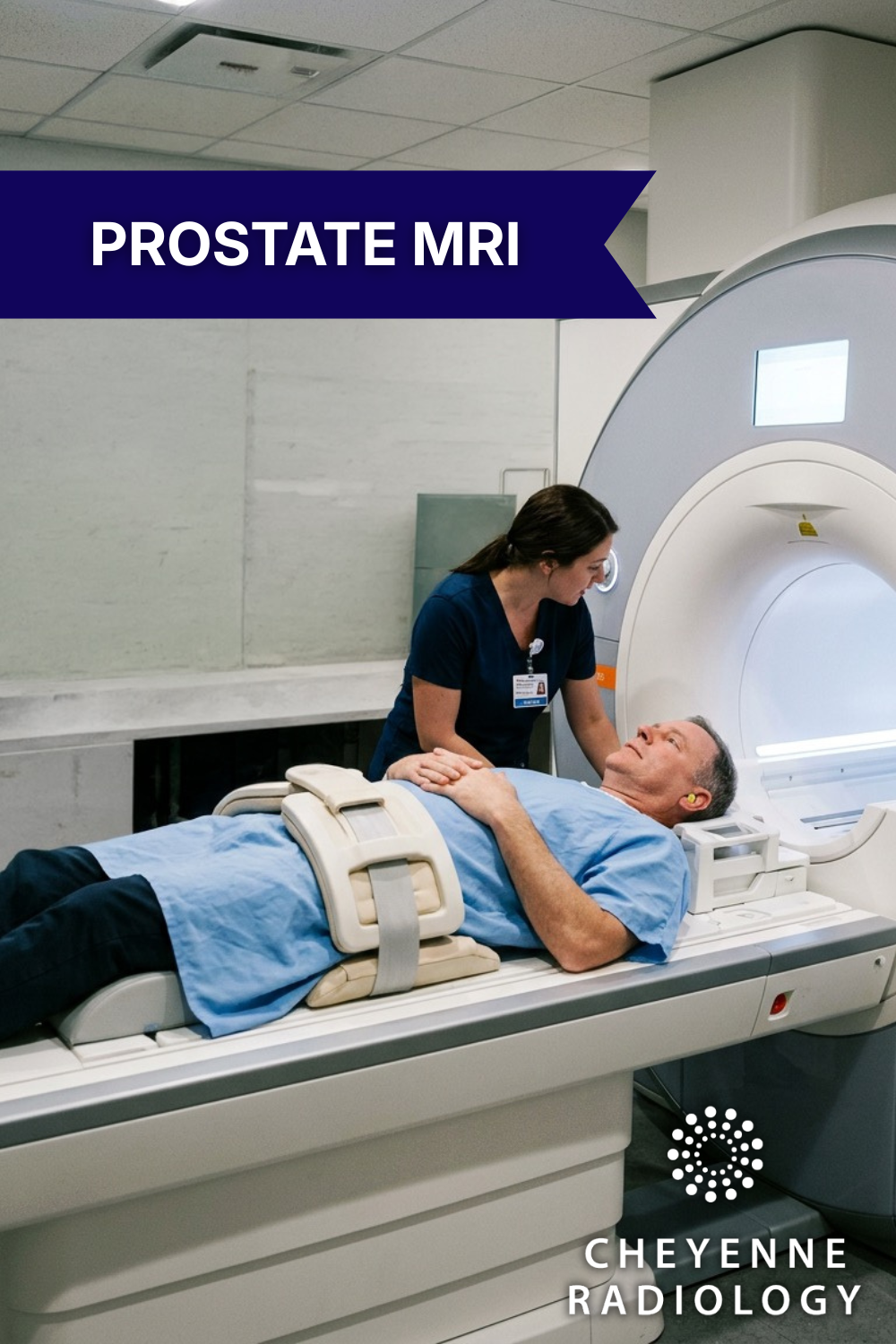
What Happens During the Procedure?
During the exam:
- The patient lies on an MRI table and remains still while images are captured.
- The table moves into the MRI scanner.
- Images are obtained over approximately 30–45 minutes.
While the procedure is painless, some patients may find the MRI environment somewhat confined, but options to make the experience more comfortable are usually available.
What Can a Prostate MRI Show?
A prostate MRI helps radiologists identify:
- Suspicious lesions that may represent cancer
- The size and location of abnormalities
- Whether cancer may have spread outside the prostate
- Areas that should be targeted during biopsy
MRI has become an important tool because it can help reduce unnecessary biopsies while improving detection of clinically significant prostate cancers.
Why it Matters
Prostate cancer is one of the most common cancers affecting men.
Many prostate cancers grow slowly, but others can become aggressive if not detected early.
Long-term screening studies have demonstrated that prostate cancer screening reduces prostate cancer deaths. Data from the European Randomized Study of Screening for Prostate Cancer (ERSPC) found approximately a 13% reduction in prostate cancer mortality over long-term follow-up among screened men. Emerging MRI-based screening approaches may further improve accuracy while reducing unnecessary procedures.
CT Lung Cancer Screening: Detecting Cancer Before Symptoms Begin
What Is a Low-Dose CT Lung Screening?
Low-dose CT (LDCT) is a specialized CT scan designed specifically to screen for lung cancer in high-risk individuals.
It uses significantly less radiation than a traditional diagnostic CT scan while still providing detailed images of the lungs.
The exam is typically recommended for adults who meet certain age and smoking-history criteria established by screening guidelines.
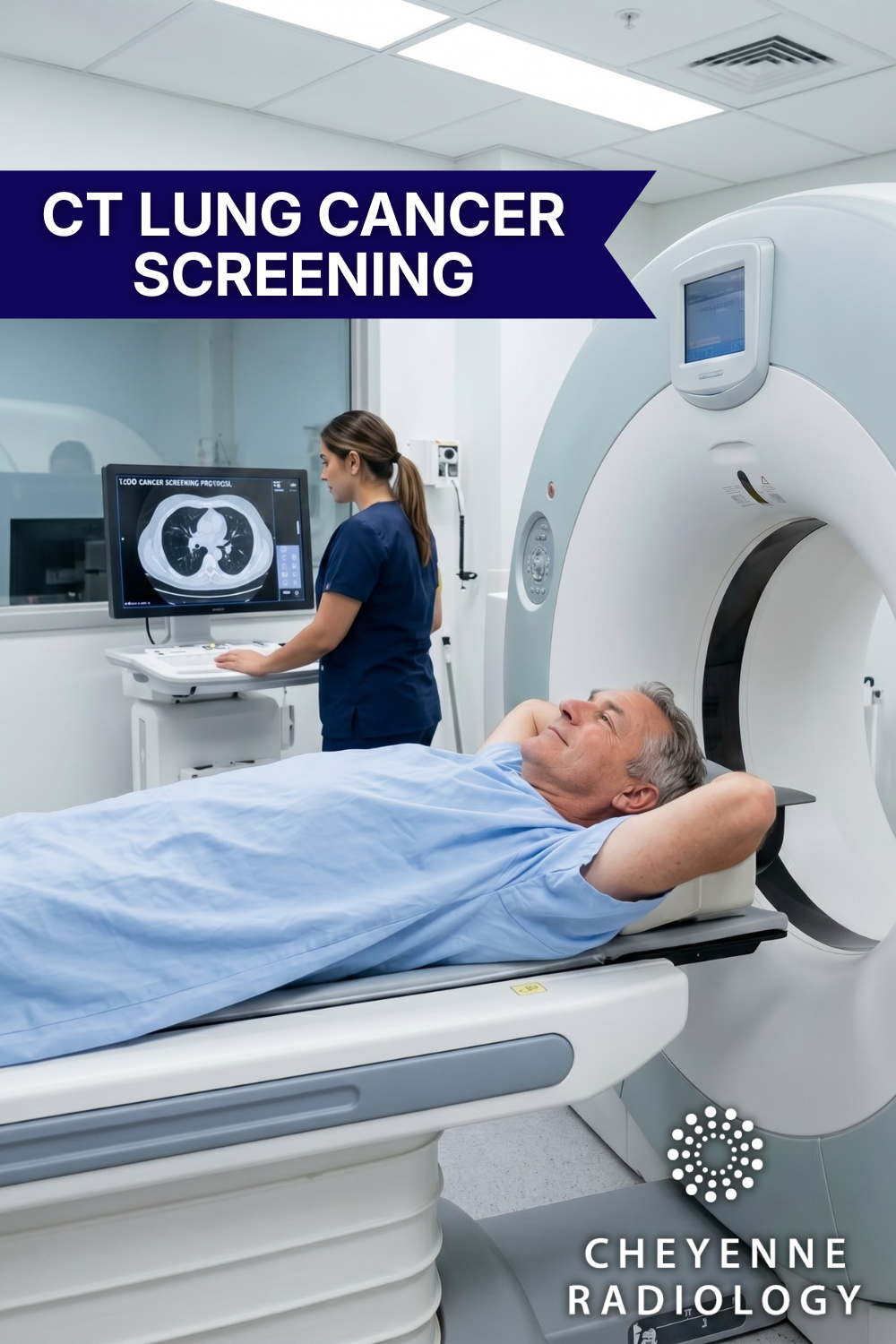
What Happens During the Exam?
The process is remarkably simple:
- No needles
- No contrast injection
- No special preparation
- Usually completed in less than 10 minutes
Patients lie on a table while the scanner quickly captures images of the chest.
What Can the Scan Detect?
A low-dose CT can identify:
- Small lung nodules
- Early-stage lung cancers
- Other abnormalities within the lungs and chest
Many of these findings would not be visible on a standard chest X-ray.
The Statistics Are Powerful
Lung cancer remains the leading cause of cancer death in the United States, largely because it is often discovered after symptoms develop.
Large clinical trials have shown that annual low-dose CT screening reduces lung cancer mortality by approximately 20% compared with chest X-rays. In practical terms, researchers found about three fewer lung cancer deaths per 1,000 people screened. Additional studies have demonstrated similar benefits, with some showing approximately a 24% reduction in lung cancer mortality.
Abdominal Ultrasound: Screening for a Silent but Deadly Aneurysm
What Is an Abdominal Aortic Aneurysm (AAA)?
The aorta is the body's largest artery. An abdominal aortic aneurysm occurs when a section of the aorta weakens and bulges outward.
The dangerous part?
Most aneurysms cause no symptoms at all.
A person can feel perfectly healthy until the aneurysm ruptures—an emergency that carries a very high risk of death.
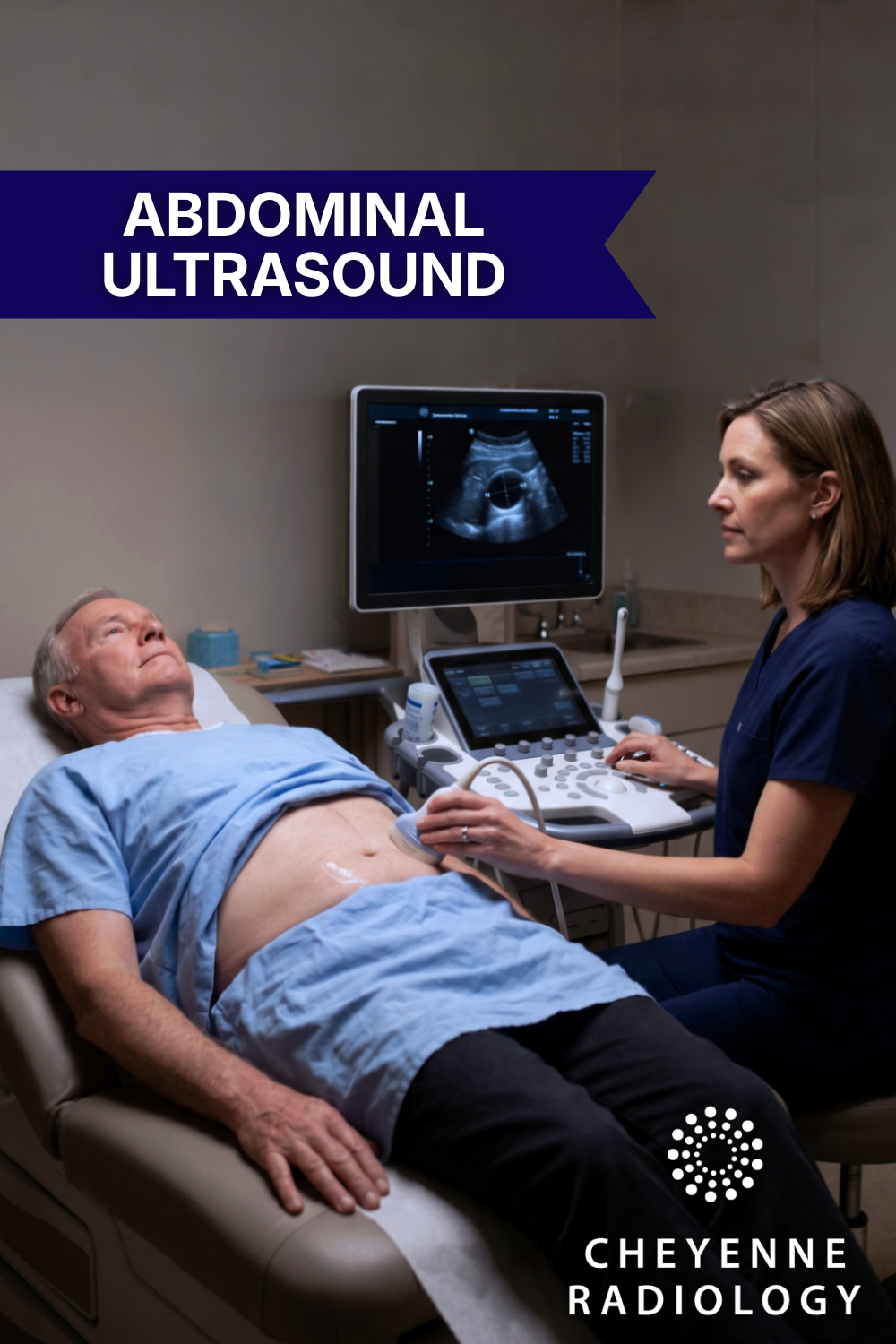
What Is the Screening Exam?
AAA screening uses ultrasound technology to visualize the abdominal aorta.
Ultrasound uses sound waves rather than radiation. The exam is noninvasive, painless, quick, and widely available. Many patients complete the exam in about 15–30 minutes.
What Happens During the Procedure?
A technologist places a small handheld ultrasound probe on the abdomen while images are obtained.
The exam measures the diameter of the aorta and evaluates for aneurysm formation.
What Do the Results Tell Providers?
Ultrasound can determine:
- Whether an aneurysm is present
- The size of the aneurysm
- Whether surveillance or treatment is needed
Small aneurysms may simply require periodic monitoring, while larger aneurysms may require vascular surgical evaluation.
Why Screening Matters
Research involving more than 120,000 men found that screening men aged 65 and older reduced deaths related to abdominal aortic aneurysms by approximately 35% and reduced aneurysm ruptures by nearly 40%.
This is particularly important because rupture can be catastrophic. Mortality associated with ruptured aneurysms can be as high as 81%.
Current screening recommendations commonly include a one-time ultrasound for men ages 65–75 who have ever smoked.
Gentlemen, Your Family Wants You Around
Many men pride themselves on toughness, independence, and self-reliance. Those qualities can be admirable.
But ignoring preventive healthcare isn't strength—it can be a missed opportunity.
Getting screened doesn't mean you're weak. It means you're taking responsibility for your health, your future, and the people who depend on you.
The strongest thing a man can sometimes say is: "I should probably get that checked."
A Message for the Women Reading This
Let's be honest: many preventive appointments happen because someone else scheduled them.
Wives. Partners. Mothers. Daughters. Friends.
Women often serve as the healthcare advocates in their families, encouraging loved ones to schedule appointments, follow up on symptoms, and prioritize preventive care.
If there's an important man in your life—a husband, partner, father, brother, son, or friend—consider having a conversation about screening and preventive health.
Sometimes a simple reminder can make all the difference.
Not because you're nagging.
Because you care.
And because early detection may help ensure there are many more birthdays, family dinners, vacations, fishing trips, golf rounds, backyard barbecues, and dad jokes still to come.
The Bottom Line
Many of the most serious health threats affecting men develop silently.
Fortunately, imaging can often detect these conditions before symptoms appear.
- Prostate MRI helps identify suspicious prostate abnormalities and guide treatment decisions.
- Low-dose CT lung screening can detect lung cancer earlier and has been shown to reduce lung cancer deaths among high-risk individuals.
- Abdominal ultrasound screening can identify life-threatening aneurysms before rupture occurs and significantly reduce aneurysm-related deaths.
This Men's Health Month, don't wait for symptoms to become the reason you seek care. Talk with your healthcare provider about whether these screening exams may be right for you.
Because taking care of your health isn't about adding years to your life—it's about adding life to your years.
References:
- National Lung Screening Trial Research Team. Reduced lung-cancer mortality with low-dose computed tomographic screening. New England Journal of Medicine. 2011;365(5):395-409.
- US Preventive Services Task Force. Screening for Lung Cancer: Recommendation Statement. JAMA. 2021;325(10):962-970.
- Ahmed HU, El-Shater Bosaily A, Brown LC, et al. Diagnostic accuracy of multi-parametric MRI and TRUS biopsy in prostate cancer (PROMIS). Lancet. 2017;389(10071):815-822.
- Schröder FH, Hugosson J, Roobol MJ, et al. Screening and prostate-cancer mortality in a randomized European study. New England Journal of Medicine. 2009;360(13):1320-1328.
- Guirguis-Blake JM, Beil TL, Sun X, Senger CA, Whitlock EP. Primary care screening for abdominal aortic aneurysm. JAMA.2019;322(22):2219-2238.
- American Cancer Society. Cancer Facts & Figures 2026.
- Society for Vascular Surgery. Abdominal Aortic Aneurysm Screening Guidelines.
Imaging for Kids: What Parents Should know about X-rays, CTs, MRIs and Ultrasounds file
This guide explains how pediatric imaging is tailored for children, how the ALARA principle helps minimize radiation exposure, when X-ray, Ultrasound, MRI, and CT may be used, and how technologists help make exams more comfortable for children.
The 3 Imaging Screenings Every Woman Should Know About after 40
How preventive imaging supports early detection, long-term health, and confident healthcare decisions.