

Why Preventative Imaging Matters in 2026
Early Detection for Your Health and Your Wallet
As we begin 2026, many people are setting health goals — exercising more, eating better, and taking proactive steps toward long-term wellness. One of the most impactful resolutions you can make this year is to prioritize preventive imaging.
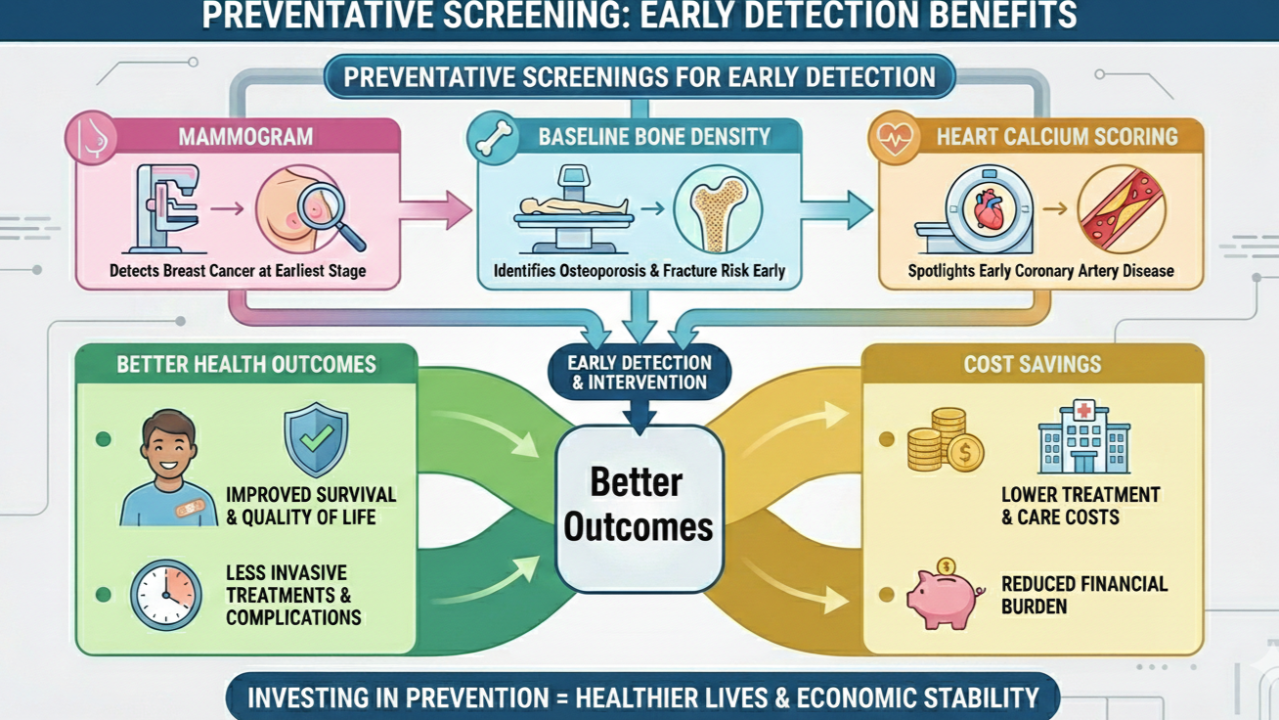
Screening exams such as mammograms, bone density scans, and heart calcium scoring CT scans can detect disease before symptoms appear. Early detection improves outcomes, expands treatment options, and often reduces both personal and financial strain.
Preventive imaging isn’t just about finding problems early — it’s about making smarter, more informed decisions about your health.
Screening Mammograms: Catching Breast Cancer Early
Breast cancer remains one of the most common cancers affecting women in the United States. About 1 in 8 women (13.1%) will be diagnosed during their lifetime. Early detection plays a critical role in survival and treatment success.
When breast cancer is found at a localized stage, the five-year survival rate is nearly 99%, compared to about 32% when diagnosed after it has spread to distant parts of the body. Mammography remains the gold standard for routine breast cancer screening.
According to CDC data, roughly 80% of women aged 50–74 were up to date on screening in recent reporting, though screening rates are lower among women in their forties.
Emerging research also suggests mammograms may provide additional value beyond cancer detection. AI-enhanced analysis can identify breast arterial calcification, which is associated with increased cardiovascular risk. Women with these findings may face about a 50% higher risk of heart disease and stroke, allowing earlier risk management.
Action Step: Talk with your clinician about when to begin routine mammography based on your age, personal history, and risk factors.
Bone Density Scans: Strength You Can Measure
Osteoporosis and low bone density are often called “silent” conditions because they typically produce no symptoms until a fracture occurs. Yet fewer than half of women aged 50 and older report ever having a bone density (DEXA) scan.
The U.S. Preventive Services Task Force recommends bone density screening for:
- All women age 65 and older
- Younger postmenopausal women with increased fracture risk
Research also shows that CT scans performed for other medical reasons can sometimes be used opportunistically to assess bone density, potentially helping identify at-risk patients who might otherwise go unscreened.
Early identification allows patients to take steps to protect bone strength and reduce fracture risk through lifestyle changes and treatment when appropriate.
Action Step: Ask your clinician whether you are due for a baseline bone density scan — especially if you are postmenopausal, age 65+, or have risk factors such as prior fracture or family history.
Heart Calcium Scoring CT: Seeing Cardiac Risk Before Symptoms
Heart disease remains the leading cause of death in the United States. A heart calcium scoring CT scan measures calcified plaque in the coronary arteries and provides an early indicator of cardiovascular risk.
This quick, noninvasive exam can reveal risk long before symptoms develop, helping guide earlier intervention through lifestyle modification and medical management.
Research also shows links between bone health and heart health. Studies indicate:
- Men with osteoporosis show about a 65% higher likelihood of elevated coronary calcium scores
- Women with osteoporosis show up to a 32% increased likelihood of higher calcium scores
These connections highlight how preventive imaging in one area may provide insight into risk in another.
Action Step: If you have cardiovascular risk factors — such as high cholesterol, high blood pressure, diabetes, smoking history, or family history — ask whether a heart calcium scoring CT is appropriate for you.
Why Early Detection Improves Outcomes
Preventive imaging gives patients and care teams critical information before symptoms appear. That early insight often leads to:
- Better treatment outcomes
- Lower risk of complications
- More treatment options
- More predictable care planning
- Reduced likelihood of emergency interventions
Having baseline imaging also creates a valuable comparison point for future studies, improving diagnostic accuracy over time.
The Cost of Waiting: Health Impact and Financial Impact
Preventive screenings are not only a medical decision — they are also a financial one.
When conditions are detected early, care is usually simpler, more predictable, and less disruptive. When disease goes undetected, treatment often becomes more complex, longer in duration, and more expensive — with ripple effects across work, family life, and long-term health.
Breast health:
Early detection through screening mammography may allow for more limited treatment and shorter recovery. Later-stage diagnosis often involves multiple therapies, extended recovery, and more time away from daily responsibilities.
Bone health:A baseline bone density scan can identify early bone loss and help prevent fractures. Without screening, the first sign may be a break that requires hospitalization, surgery, or rehabilitation — and can permanently affect mobility.
Heart health:Heart calcium scoring can reveal plaque buildup before symptoms occur. Without early detection, heart disease is often discovered during an emergency event, when both medical and financial costs are significantly higher.
Baseline imaging provides a starting point for smarter long-term care decisions and helps reduce the likelihood of urgent, high-cost treatment later.
Preventive screenings are not just about early detection — they help protect quality of life and reduce avoidable strain on patients and families.
Take Control of Your Health in 2026
Whether you’re scheduling your first screening or getting back on track, now is the right time to prioritize preventive imaging.
Talk with your clinician about which screenings are right for you based on your age and risk factors. A small step today can make a meaningful difference in your health — and your future — tomorrow.
Schedule Your Preventive Imaging Appointment →